
Garmin Edge GPS Bike Computers
Garmin Edge GPS devices are mini-computers used by cyclists for a number of tasks and are one of the most popular GPS devices available.
First-time Garmin users start with entry-level computers like the Garmin Edge 520 Plus to record their rides and to upload route maps to provide on-ride turn directions, forthcoming elevations and sometimes ANT+ cadence sensor data. However, over time cyclists start to explore the additional features of the more advanced devices, like the Garmin Edge 830, 1030 or even the top-of-the-range Garmin Edge 1030 Plus.
Choosing which of the Garmin Edge range is right for you can be a daunting task but we’ve put together this guide to help you select the right model. You can compare models, specifications and prices in the comparison tables below.
The Garmin Edge range starts with the Garmin Edge 130, Garmin Edge 130 Plus and Edge Explore but we’ve focused on the mid-to-upper end of the range as this is where we’ve most personal experience and wanted to give an accurate description of the GPS units from our own perspective. However, the following links give information on the Edge 130 / Explore models.
| Preview | Product | Rating | Price | |
|---|---|---|---|---|
|
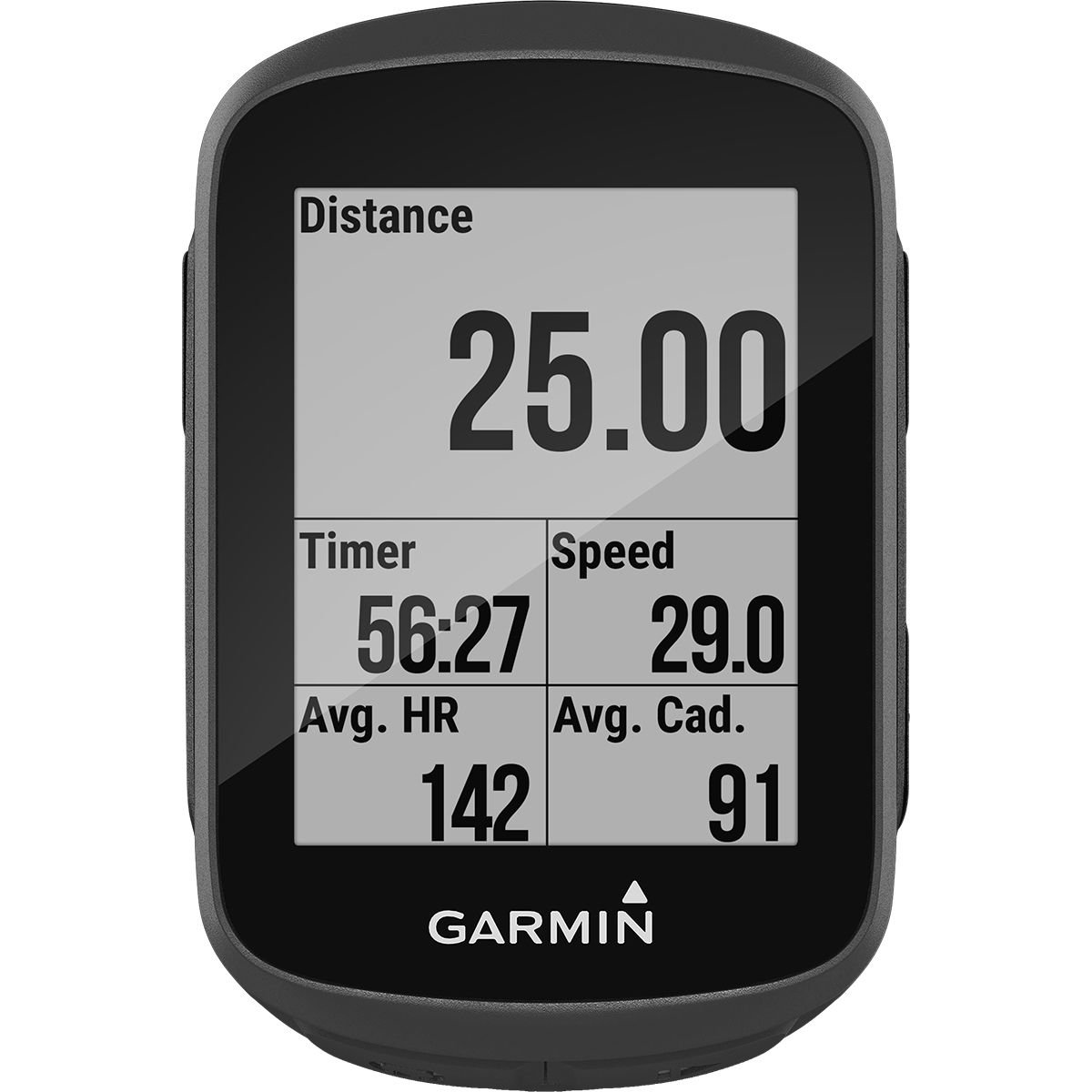
Garmin 010-01913-01 Edge 130 GPS Bike Computer - Black | 1,155 Reviews | Get Deal >> | |

|
Garmin 010-01913-06 Edge 130 GPS Bike Computer with HR Bundle - Black | 227 Reviews | Get Deal >> | |

|
Garmin Edge Explore Touchscreen Touring Bike Computer with Connected Features, White | 4,439 Reviews | £285.25 | Get Deal >> |
Introduction to Garmin Edge GPS Range
The basic function of any bike computer is to record cycling rides, including core data such as distance, route, speed and elevation. Many of us then upload this data to Strava (how to import a gpx file to strava) to keep a history of our rides and of course to brag to our cycling buddies.
Bike computers like the Garmin Edge range use the GPS element of the device to keep track on your exact location, with incredible accuracy as they now utilise several GPS systems, including Glonass & Galileo and standard GPS satellite systems.
Recording rides is just one aspect of these computers and focuses on what’s gone before, rather than what’s ahead. The Edge devices offer turn-by-turn navigation for routes & maps, helping to guide the adventurist cyclist to pastures new and discovering new routes and often hidden cycling paths.
All Garmin Edge devices have Bluetooth™ & ANT+™ functionality and the Edge 530, Edge 830 and Edge 1030 models also have WiFi accessibility. This allows you to pair your Garmin with other devices; heart rate monitors, speed and cadence sensors, and power meters to give you extended performance data. These connectivity options also enable you to upload your ride information with cycling apps; Strava, Ride with GPS and of course Garmin Connect (note: connections are made via the garmin connect app, and then synchronised with other applications).
Entry-level models use buttons on the side of the device but the Edge 830 & 1030 models (plus the Explore) have touchscreens. Most of the range have colour displays (Edge 130 is black & white) and good pixel resolution, allowing clear visibility even in poor light – the Edge 530 onwards also have a light sensor.
All of the Garmin Edge models in this review allow management of Garmin’s Varia Remote system as well as ANT+ Electronic Shifting, Shimano Di2 Synchro Shift integration and Smart Trainer controls.
Garmin Edge GPS Bike Computers : Compare Models, Specifications & Prices
So let’s start comparing the Edge computers under review. We start with our best value Garmin, the Edge 520 Plus, an excellent device and one that is far from basic. The Edge 530 is a step-up in price and functionality but is it worth the additional money? After this comes the Edge 830, a similar step-up in price but it doesn’t come with many additional features. Next comes the Edge 1030, which we’ve awarded our Editor’s Choice to as it’s a small price increase on the Edge 830 but comes packed with features. Finally in the range comes the Edge 1030 Plus, a noticeable price increase but also comes packed with features.
The tables below detail every specification and the content highlights the difference between each Edge device. As we move between models, we highlight the differences to hopefully help you choose the right Garmin for your needs. Questions or comments can be added below the article and we’ll try to answer each question as quickly as we can.
Garmin Edge GPS Bike Computers : Compare Models



Garmin Edge GPS Bike Computers : Compare GPS Sensors & Smart Features
When it comes to comparing GPS sensors and smart features, there’s not very much difference in the Edge range. Each GPS model utilises the standard GPS system and all include both the Glonass & Galileo satellites too, giving even better coverage than older models. The primary difference between the models is the inclusion of WiFi connectivity in the Edge 530, Edge 830 and both Edge 1030 versions.
Garmin Edge GPS Bike Computers : Compare Safety & Tracking Features
Garmin Edge GPS Bike Computers : Compare Training, Planning & Analysis Features
When it comes to comparing training, planning and analysis features, there is minimal differences between the various Edge models. Downloadable Training Plans are only available in the Edge 830 & Edge 1030 models, which isn’t an issue unless you really want these, likewise the Daily Workout Suggestions. The cost differential between the devices doesn’t justify these features but there are of course other features to consider.
Garmin Edge GPS Bike Computers : Compare Cycling & Connectivity Features

Garmin Edge 520 Plus
The Garmin Edge 520 Plus is excellent value for money and is the one I use day-to-day. It may be the smallest Garmin in the range but I’ve never found this to be a disadvantage, nor the lack of a touchscreen.
The Edge 520 Plus comes with a colour screen and a 2.3″ display screen (35 x 47 mm). Pixel resolution (200 x 265 pixels) is the lowest of all the Edge models but if you are looking for basic functionality (recording ride data and turn navigation), the Edge 520 will not disappoint.
GPS systems include both the Glonass & Galileo networks so location finding and navigation is never an issue. The Edge 520 Plus connectivity is comparable to the other models in the Edge range, although it doesn’t come with WiFi, which is the only area I’d say was missing.
- Features advanced navigation, including new navigation alerts and the preloaded Garmin Cycle Map with turn-by-turn directions – on and off road
- Preloaded Strava Live Segments let you compete second by second with your previous best or another rider’s PR; see real-time results right on your screen
- Stay connected with Live Track and Group Track, smart notifications, rider-to-rider messaging and built-in Incident Detection
- Monitors cycling-specific VO2 max and recovery time when used with power and heart rate
What’s the difference between the Garmin Edge 530 and Garmin Edge 520 Plus GPS Devices?
The Edge 530 definitely has more features than the Edge 520 Plus but whether these are needed and can justify the quite substantial price difference, I’m not sure. The WiFi connectivity is probably the only major advantage over the Edge 520 Plus, unless the additional features appeal to you. The Edge 520 Plus gets our Best Value award as it’s a great device at an affordable price.
- Price: Edge 530 £230 vs Edge 520 Plus £169 (check latest prices)
- Dimensions: Edge 530 is slightly bigger
- Display: Edge 530 has slightly better pixel resolution; 246 x 322 vs 200 x 400 pixels
- Weight: Edge 530 weighs 75.8g vs 62.5g for the Edge 520 Plus
- Battery: Edge 530 has max battery life of 20 hours vs 15 hours for the Edge 520 Plus, and a battery save mode feature
- In-Ride Power Compatible: Edge 530
- Amber Light Sensor: Edge 530
- Connectivity: Edge 530 includes WiFi
- Text/Phone Response: Edge 530
- Assistance: Edge 530
- Bike Alarm: Edge 530
- In-Reach Compatibility: Edge 530
- Daily Workout Suggestions: Edge 530
- Training Effect (aerobic): Edge 530
- Race An Activity: Edge 530
- Physiological Measurements: Edge 530
- ClimbPro Ascent Planner: Edge 530
- MTB Dynamics: Edge 530
- Integrated Trailforks Trail Data: Edge 530
What’s the difference between the Garmin Edge 830 and Garmin Edge 530 GPS Devices?

- Price: Edge 830 £340 vs Edge 530 £230 (check latest prices)
- Touchscreen: Edge 830
- Weight: The Edge 830 is slightly heavier at 79.1g vs 75.8g for the Edge 530
- On-Device Course Creator: Edge 830
What’s the difference between the Garmin Edge 1030 and Garmin Edge 830 GPS Devices?
The Garmin Edge 1030 wins our Editor’s Choice award for it’s excellent performance and extensive features. The price is more than double the Edge 520 Plus, which wins our Best Value award. One of the main differences in the Edge 1030 is the additional storage options, which is 16GB plus microSD option vs internal memory for the Edge 830.
- Price: Edge 1030 £395 vs Edge 830 £340 (check latest prices)
- Display: Edge 1030 has slightly better pixel resolution; 282 x 470 vs 246 x 322 pixels
- Weigh: Edge 1030 is heavier at 123g vs 79g but the extra isn’t a concern
- Memory Storage: Edge 1030 16GB plus microSD option
- Assistance: Not available on the Edge 1030
- Bike Alarm: Not available on the Edge 1030
- In-Reach Compatible: Not available on the Edge 1030
- Integrated Trailforks Trail Data: Not available on the Edge 1030
What’s the difference between the Garmin Edge 1030 Plus and Garmin Edge 1030 GPS Devices?
The Garmin Edge 1030 Plus has a few additional features to the Edge 1030 but nothing to justify the significant extra cost, unless the 32GB memory storage is important to you. This is why the Edge 1030 is awarded our Editor’s Choice, all the benefits of the 1030 Plus (broadly) but at £150 less.
- Price: Edge 1030 Plus £540 vs Edge 1030 £395 (check latest prices)
- Battery Life: Edge 1030 Plus has a maximum battery life of 24 hours vs 20 hours for the Edge 1030
- Memory Storage: Edge 1030 Plus 32GB, double the Edge 1030 16GB
- Daily Workout Suggestions: Edge 1030 Plus
- Integrated Trailforks Trail Data: Edge 1030 Plus

- Dynamic performance monitoring and provides insights on your VO2 max, recovery, workout load focus, heat and height acclimatization, nutrition, hydration and more.
- Multi-band GNSS technology provides improved position accuracy.
- Up to 26 hours of battery life in intense mode and up to 42 hours in battery saving mode.
- See remaining rise and tilt as you cycle up so you can balance the effort with ClimbPro.


